How seed oils are made: from seed to bottle
Hexane extraction, degumming, bleaching, deodorising. The manufacturing process behind your cooking oil is more industrial than you might expect.
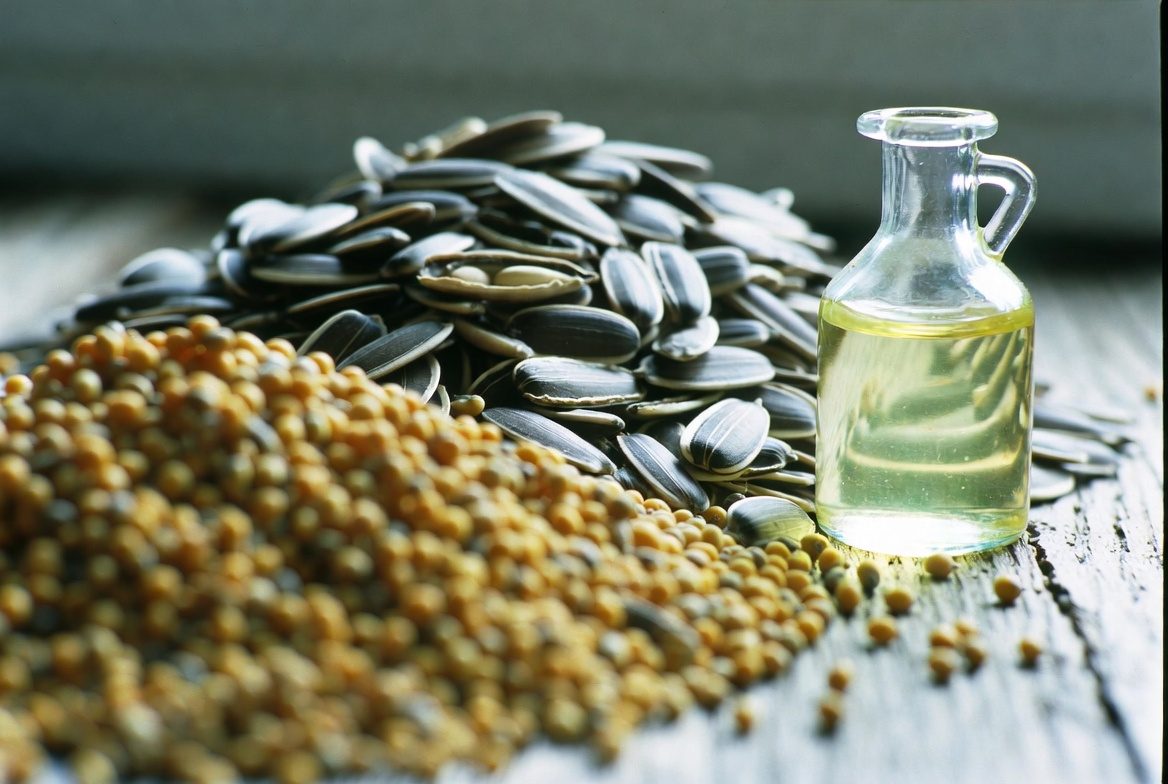
Most people don't think about how their cooking oil is made. If they did, they might make different choices. The process that turns a seed into a clear, odourless liquid in a plastic bottle is a long way from pressing olives or rendering tallow.
The process
1. Cleaning and preparation
Seeds — soybean, canola, sunflower, corn, or cottonseed — are cleaned, dehulled, and flaked or crushed to increase surface area.
2. Solvent extraction
This is the key step. The crushed seeds are washed with hexane, a petrochemical solvent derived from crude oil. Hexane dissolves the oil out of the seed material far more efficiently than mechanical pressing — extracting virtually all of the available oil.
Hexane is the primary extraction solvent used for the world's five largest commodity oilseeds: soybean, canola, sunflower, cottonseed, and peanut.
After extraction, the hexane is evaporated off and (in theory) recovered. Trace residues may remain in the finished oil, though at levels generally considered safe by food regulators.
3. Degumming
The crude oil contains phospholipids and other compounds that cause cloudiness and reduce shelf life. These are removed by mixing the oil with water or acid, causing the gums to separate out.
4. Alkali refining
The oil is treated with sodium hydroxide (caustic soda) to neutralise free fatty acids that would make it taste rancid. The resulting "soapstock" is separated out.
5. Bleaching
Despite the name, this doesn't involve chlorine bleach. The oil is mixed with adsorbent clay (bleaching earth) which binds to pigments, oxidation products, and other undesirable compounds. The clay is filtered out, leaving a lighter, more neutral oil.
6. Deodorising
The oil is heated to 200–260°C under vacuum to strip out volatile compounds responsible for taste and smell. This is the step that makes all refined seed oils taste the same: like nothing.
It's also the step that generates processing contaminants. The European Food Safety Authority (EFSA) has identified two contaminants of concern:
- Glycidyl esters — classified as a Group 2A probable human carcinogen by the International Agency for Research on Cancer
- 3-MCPD esters — classified as Group 2B (possibly carcinogenic). EFSA revised its safe intake limits downward in 2018
7. The finished product
What arrives in the bottle is colourless, odourless, and flavourless. It has been stripped of virtually all micronutrients, pigments, and flavour compounds. It is, in the most literal sense, a refined industrial product.
Compare this to tallow
Rendering tallow is one of the simplest food-preparation processes:
- Cut the suet from the animal
- Heat it slowly at low temperature
- Strain through cloth
- Jar it
No solvents. No caustic soda. No bleaching clay. No high-temperature deodorising. No processing contaminants. The finished product is golden, faintly fragrant, and looks like what it is — animal fat.
The label doesn't tell you
When you read "sunflower oil" or "vegetable oil" on an ingredient list, there's no indication of the manufacturing process. The same label could describe cold-pressed sunflower oil (a much simpler product) or hexane-extracted, fully refined oil. In practice, the vast majority of seed oils used in food manufacturing and sold at retail are fully refined through the process described above.
The transparency question
This isn't about demonising an industry. It's about transparency. If you knew that your cooking oil was extracted with a petrochemical solvent, washed with caustic soda, bleached with clay, and heated to 260°C — and that this process generated measurable amounts of probable carcinogens — you might at least want to know.
Tallow doesn't need any of that. It never did.
References: Penn State Extension, "Processing Edible Oils"; EFSA (2018) 3-MCPD risk assessment; FDA, "Research Activities Related to MCPD Esters and Glycidyl Esters."